

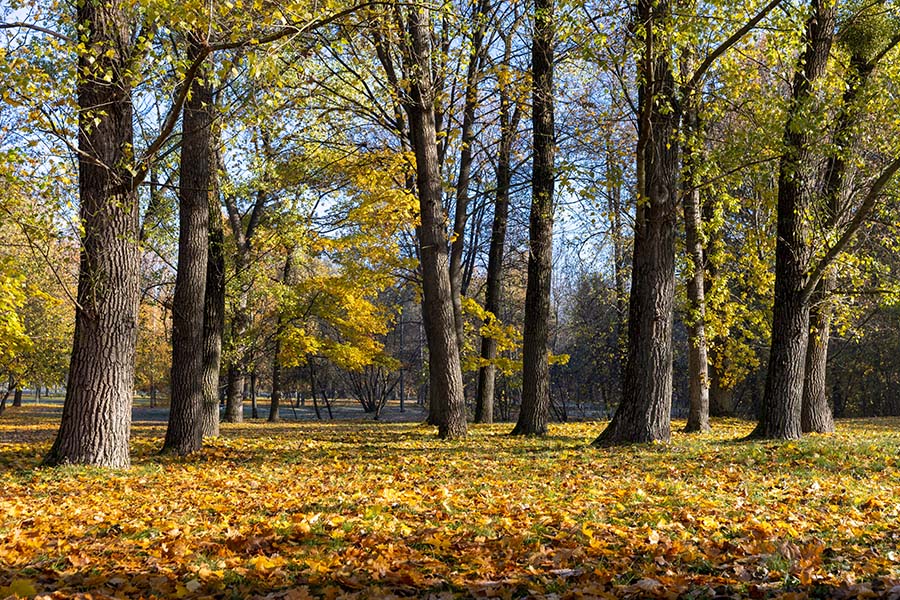
A tree may need to be cut down if it is leaning significantly, showing signs of root movement, suffering from extensive decay, has large areas of dead branches, or is structurally unstable. In some cases, disease or storm damage can also make removal the safest option. A qualified tree surgeon can assess whether the tree can be saved or if removal is necessary.
Trees add beauty and value to a garden, but when they become unsafe or unhealthy, early action is essential. If you’re based in Reigate, Dorking or anywhere in Surrey, understanding the warning signs can help you make the right decision.
Quick Signs a Tree May Need to Be Removed
If you’re unsure whether a tree in your garden is safe, look out for the following warning signs:
- Is leaning more than usual
- Has exposed or lifting roots
- Shows large areas of deadwood
- Has visible fungal growth at the base
- Has a split or cracked trunk
- Has suffered severe storm damage
- Is causing structural issues to buildings
Not all trees showing these signs need to be cut down — but they should always be assessed by a qualified tree surgeon.
1. The Tree Is Leaning Significantly
A slight lean can be normal, particularly if a tree has grown towards light over time. However, a sudden or worsening lean may signal structural instability or root failure.
Warning signs include:
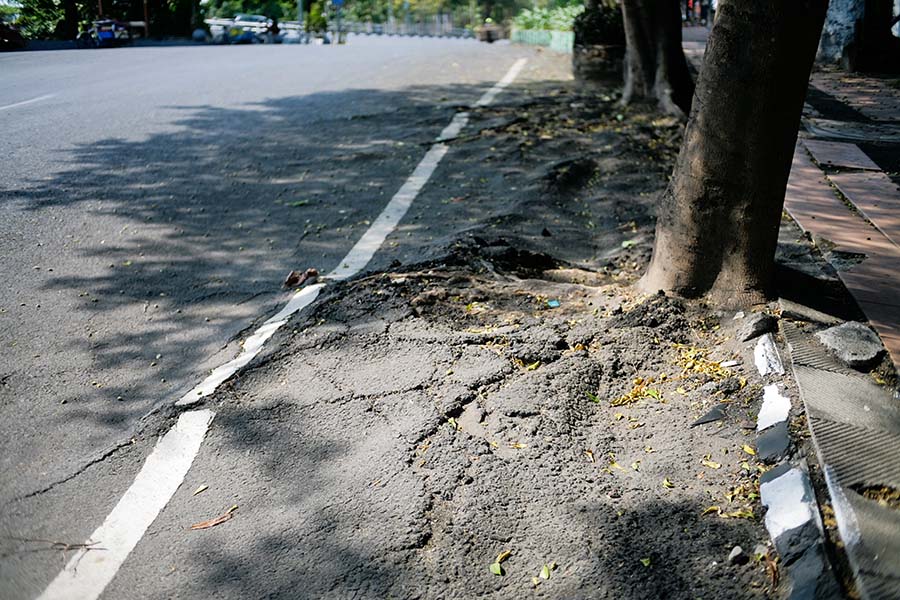
- Fresh soil movement or cracking around the base
- Exposed or lifting roots
- A lean that has appeared after storm damage
- The tree shifting direction over time
If a tree in your Surrey garden begins leaning noticeably, it should be assessed urgently by a qualified tree surgeon.
2. Extensive Dead or Dying Branches
Deadwood in the upper canopy is often the first visible sign of decline. While small areas of deadwood can be removed, extensive dieback across the crown may indicate:
- Disease
- Root damage
- Structural failure
- Environmental stress
If large sections of the tree are no longer producing leaves during growing season, removal may need to be considered.
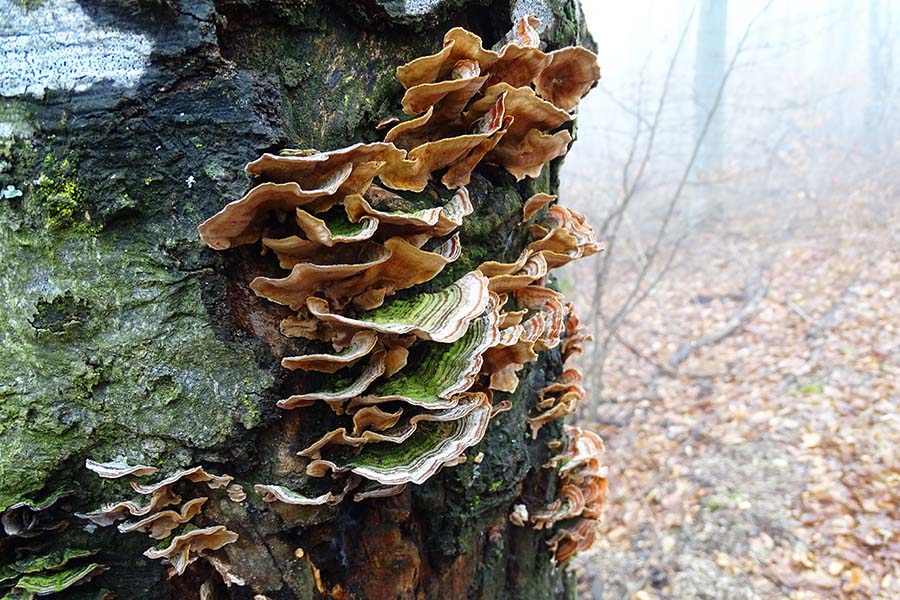
3. Fungal Growth Around the Base
Fungi growing at the base of a tree can indicate internal decay, particularly if you see bracket fungi or large mushroom formations attached to the trunk.
Common concerns include:
- Soft, crumbling wood
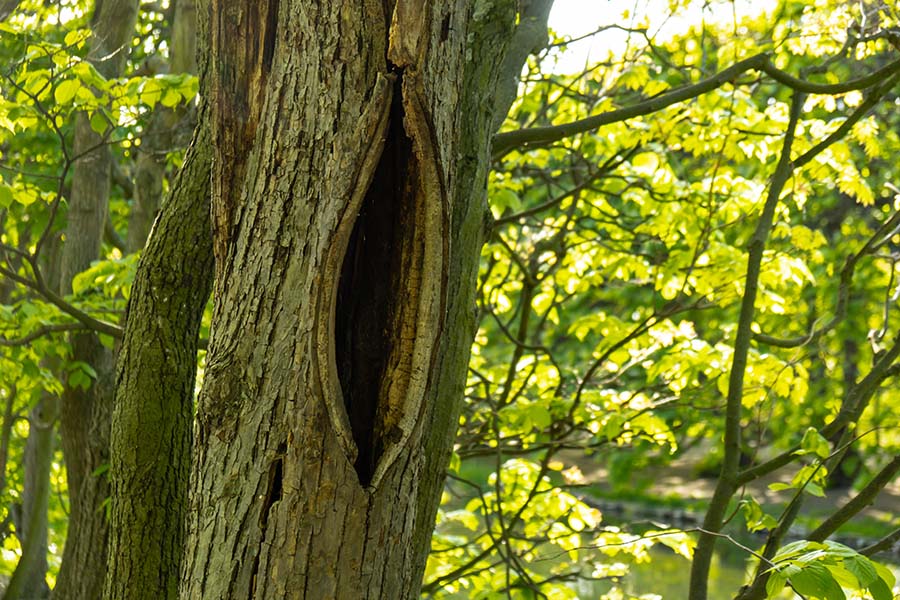
- Hollow sections
- Visible cavities
- Bark separating from the trunk
Decay weakens structural integrity, increasing the risk of failure — particularly during storms.
4. Severe Storm Damage
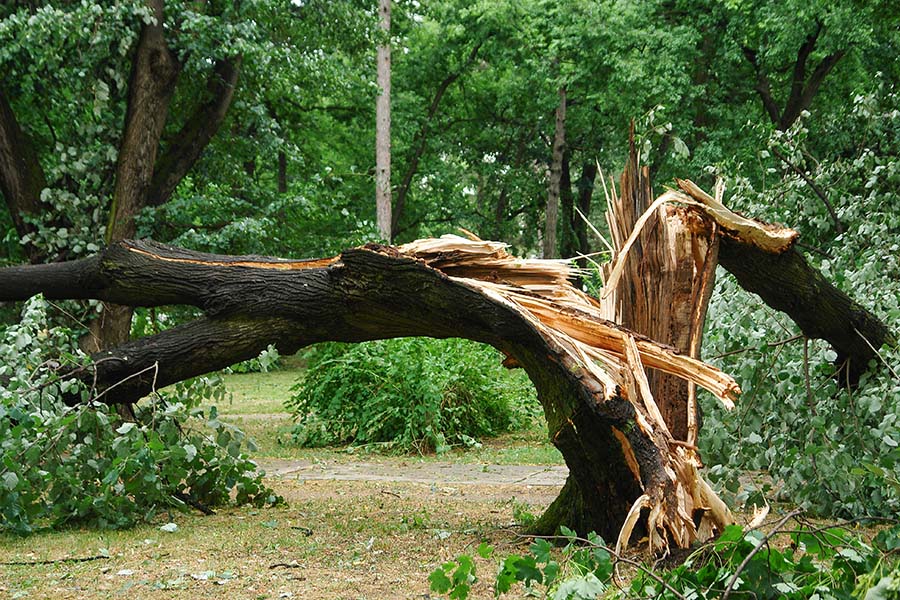
Recent storms across Surrey have caused widespread tree damage. A tree may need to be cut down if:
- The trunk has split vertically
- Large limbs have torn away
- The root plate has lifted
- The tree is structurally compromised
Even if the tree is still standing, hidden damage can make it unstable. A professional inspection is always recommended following severe weather.
5. The Tree Is Hollow or Structurally Unsound
Some trees can survive with minor hollowing, but extensive internal decay can compromise stability.
Warning signs include:
- Large cavities
- Cracks running through the trunk
- Wood that sounds hollow when tapped
- Visible structural weakness
A qualified tree surgeon can assess whether the tree is safe to retain or if removal is the safest option.
6. The Tree Is Causing Structural Damage
Trees growing too close to buildings can cause:
- Foundation pressure
- Drain interference
- Roof obstruction
- Gutter damage
- Subsidence concerns
In areas such as Dorking and Reigate, where gardens can be compact, mature trees sometimes outgrow their surroundings. In some cases, crown reduction can solve the issue — but in others, full removal may be necessary.
7. The Tree Is Severely Diseased
Certain diseases, such as ash dieback, can significantly weaken a tree over time. Signs of advanced disease include:
- Extensive leaf loss
- Crown dieback
- Brittle branches
- Bark lesions
If the disease has progressed too far, the safest course of action may be removal — particularly if the tree is near public spaces or buildings.
When Should a Tree NOT Be Cut Down?
It’s important to remember that not every problem requires removal. Often, professional tree surgery can resolve concerns through:
- Crown reduction
- Crown thinning
- Deadwood removal
- Cabling and bracing
An experienced tree surgeon will always assess whether a tree can be safely retained before recommending removal.
Do You Need Permission to Cut Down a Tree in Surrey?
Before removing a tree, you must check whether:
- It is protected by a Tree Preservation Order (TPO)
- It is located within a conservation area
Local authorities such as Reigate & Banstead Borough Council or Mole Valley District Council may require formal permission before work can begin.
Failing to obtain consent where required can result in significant fines.
You should contact a professional tree surgeon if:
- You’re unsure about a tree’s safety
- There are visible signs of decay or instability
- The tree has suffered storm damage
- It is leaning or showing root movement
- You’re concerned about disease
Tree removal in Dorking, Reigate and Surrey is a skilled and potentially dangerous task that should never be attempted without proper training and equipment.
Tree Removal in Dorking, Reigate & Surrey
If you’re concerned about a tree in your garden, South East Tree Surgeons provide professional assessments and safe tree removal services across Surrey, including Dorking and Reigate.
We offer:
- Free site visits
- Honest, professional advice
- Fully insured tree surgery
- Emergency tree removal when required
Our priority is always safety — while preserving healthy trees wherever possible.
Final Thoughts
Knowing whether a tree needs to be cut down isn’t always straightforward. However, clear warning signs such as leaning, decay, disease and structural instability should never be ignored.
If you’re unsure, the safest step is to arrange a professional inspection. Early assessment can prevent accidents, protect your property and help you make an informed decision about your trees.
Concerned about a tree in your garden?
Our experienced tree surgeons in Reigate, Dorking and Surrey offer free assessments and honest advice.
👉 Contact us today for a professional inspection.