
If the trees in your garden look healthy, it can be tempting to assume that they don’t need any attention. However, problems such as decay, weak branches and structural defects are not always obvious from ground level.
So, how often should you have your trees checked by a tree surgeon?
There isn’t one inspection schedule that’s right for every tree. Age, species, condition, location and recent weather can all affect how frequently a tree should be assessed.
For homeowners in Dorking, Reigate and across Surrey, periodic professional inspections can help identify problems early and determine whether any tree surgery is actually necessary.
How Often Should a Tree Be Inspected?
There is no universal rule that every garden tree must be professionally inspected at a fixed interval.
A mature tree close to a house, driveway, road or frequently used area may warrant more regular attention than a young tree in an open part of a garden.
An inspection may also be sensible following:
- Severe storms or strong winds
- Noticeable changes in the tree
- Branch failure
- Building or landscaping work nearby
- Damage to roots or the trunk
- Signs of disease or decay
The appropriate frequency should therefore be based on the individual tree and the potential consequences if part of it were to fail.
What Warning Signs Mean I Should Call a Tree Surgeon?
You shouldn’t necessarily wait for a routine inspection if something about a tree has changed.
Warning signs include:
- Large dead branches
- Hanging or broken limbs
- New cracks or splits
- Fungal growth around the trunk or roots
- Sudden or increasing lean
- Exposed or damaged roots
- Areas of missing or damaged bark
- Significant crown dieback
- Branches rubbing against buildings
- Changes following a storm
These signs don’t automatically mean that a tree needs to be removed. In many cases, appropriate pruning or crown work may be enough to manage the problem.
Why Are Mature Trees Worth Monitoring?
Large mature trees are an important feature of many properties across Surrey.
As trees mature, however, they can develop defects that are difficult for homeowners to identify.
A professional tree surgeon can look at the tree’s:
- Crown structure
- Branch unions
- Trunk
- Root area
- Overall vigour
- Deadwood
- Evidence of disease or decay
The objective isn’t simply to find work that needs doing. A good assessment should establish whether intervention is necessary and, if so, what the least disruptive appropriate option is.
Should Trees Be Checked After a Storm?
Yes, particularly if the tree is large or close to people or property.
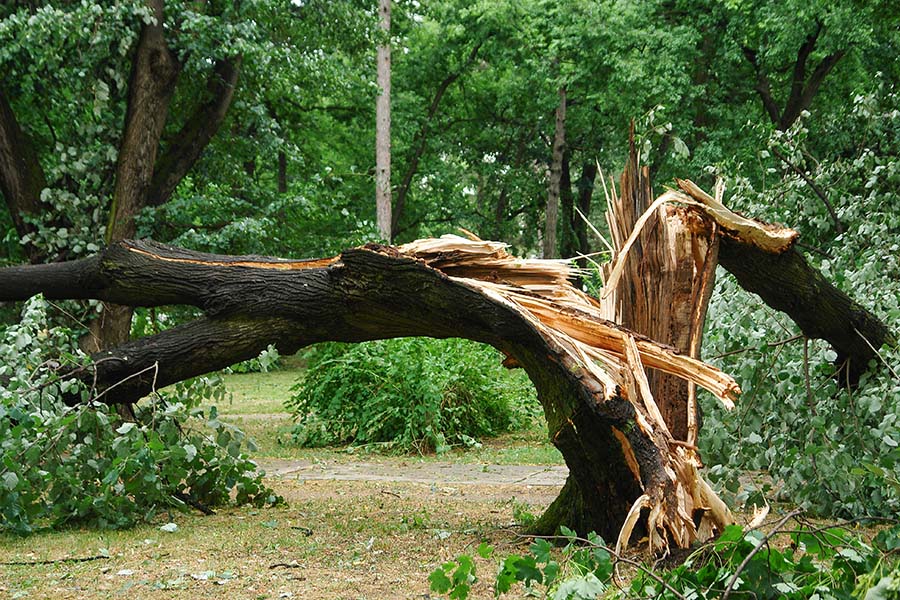
Storm damage isn’t always as obvious as a fallen tree. High winds can cause:
- Partially fractured branches
- Cracked unions
- Hanging limbs
- Root movement
- Changes to a tree’s lean
If something appears different following severe weather, professional assessment is sensible.
Does a Tree Need Surgery Every Time It’s Inspected?
No.
A tree inspection may conclude that no immediate work is required.
Where work is recommended, options might include:
- Deadwood removal
- Tree pruning
- Crown reduction
- Crown lifting
- Crown thinning
- Cabling or bracing
- Monitoring
- Tree removal / felling where retention isn’t considered appropriate
Good tree management should be based on the condition of the tree rather than automatically recommending unnecessary cutting.
What About Trees Close to Houses?
Trees close to homes deserve particular attention because falling branches could potentially damage roofs, vehicles, fences or other structures.
However, proximity to a house does not automatically mean a tree is unsafe.
A tree surgeon can assess the tree’s size, condition, structure and relationship with the surrounding property before recommending appropriate work.
Can Regular Tree Surgery Prevent Problems?
Appropriate maintenance can help manage certain problems before they become more serious.
For example, removing deadwood can address potentially hazardous dead branches, while carefully planned crown work can manage the size and structure of suitable trees.
Importantly, tree surgery should be appropriate to the species and condition of the tree. Excessive or unnecessary pruning can itself be damaging.
Do Protected Trees Still Need Inspections?
Yes.
A Tree Preservation Order or conservation-area status doesn’t mean a tree shouldn’t be maintained. It means that restrictions may apply to work carried out.
If work is recommended, the tree’s protection status should be checked before pruning or removal begins.
Professional tree surgeons familiar with work in Dorking, Reigate and Surrey can advise on the appropriate next steps.
Tree Inspections in Dorking, Reigate and Surrey
South East Forestry and Tree Services provides professional tree surgery across Dorking, Reigate and Surrey.
Whether you’re concerned about a particular tree or simply want professional advice about trees around your property, an assessment can establish whether work is required and which option is most appropriate.
Early advice can often allow a problem to be managed before it becomes more difficult or expensive.
Quick Answer: When Should I Contact a Tree Surgeon?
Consider professional advice if:
- A tree has visibly changed
- Large branches are dead or damaged
- The tree has suffered storm damage
- You notice cracks, fungi or decay
- The tree is leaning unexpectedly
- Branches are interfering with buildings
- You’re planning construction close to trees
- You’re unsure whether a mature tree is safe
Final Thoughts
There is no single inspection interval that’s appropriate for every tree.
The most important factors are the tree’s age, condition, location and how it changes over time.
For homeowners in Dorking, Reigate and across Surrey, periodic professional assessment combined with checking trees after severe weather can help identify potential problems early while avoiding unnecessary work.
FAQs
How often should a tree surgeon inspect my trees?
There is no fixed interval suitable for every tree. Inspection frequency depends on factors such as age, condition, location and the consequences of branch or tree failure.
Should I have my trees checked after a storm?
If a tree has suffered visible damage, developed a new lean, lost branches or appears different following severe weather, professional assessment is advisable.
Does a tree inspection mean I’ll need tree surgery?
No. An inspection may find that no work is currently necessary. Where intervention is recommended, the tree surgeon should explain why and suggest an appropriate solution.
How can I tell if a tree may be unsafe?
Possible warning signs include dead branches, cracks, hanging limbs, fungal growth, damaged roots, significant dieback or a sudden change in lean.
Can a protected tree still be pruned?
Potentially, but permission or notification may be required. Check whether the tree is subject to a Tree Preservation Order or conservation-area controls before work begins.