
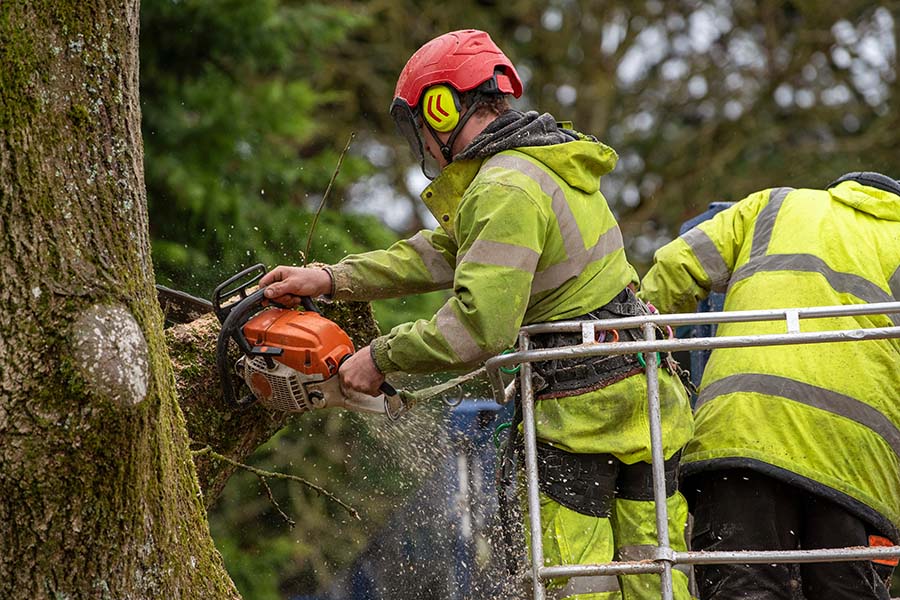
When a tree becomes too large, starts dropping branches or appears unhealthy, homeowners often assume it needs to be cut down.
But does the tree really need removing, or could professional pruning solve the problem?
For many trees, removal is not the only option. Crown reduction, deadwood removal or other carefully selected tree surgery may allow a mature tree to be safely retained.
Here we look at the difference between tree pruning and tree removal and explain how tree surgeons in Dorking, Reigate and Surrey decide which approach may be appropriate.
What Is Tree Pruning?
Tree pruning involves selectively removing particular branches to achieve a defined objective.
Depending on the tree and the problem, pruning might involve:
- Removing dead or damaged branches
- Improving structure
- Creating clearance
- Managing canopy size
- Removing crossing or problematic branches
Professional pruning should have a clear purpose rather than simply removing branches unnecessarily.
What Is Crown Reduction?
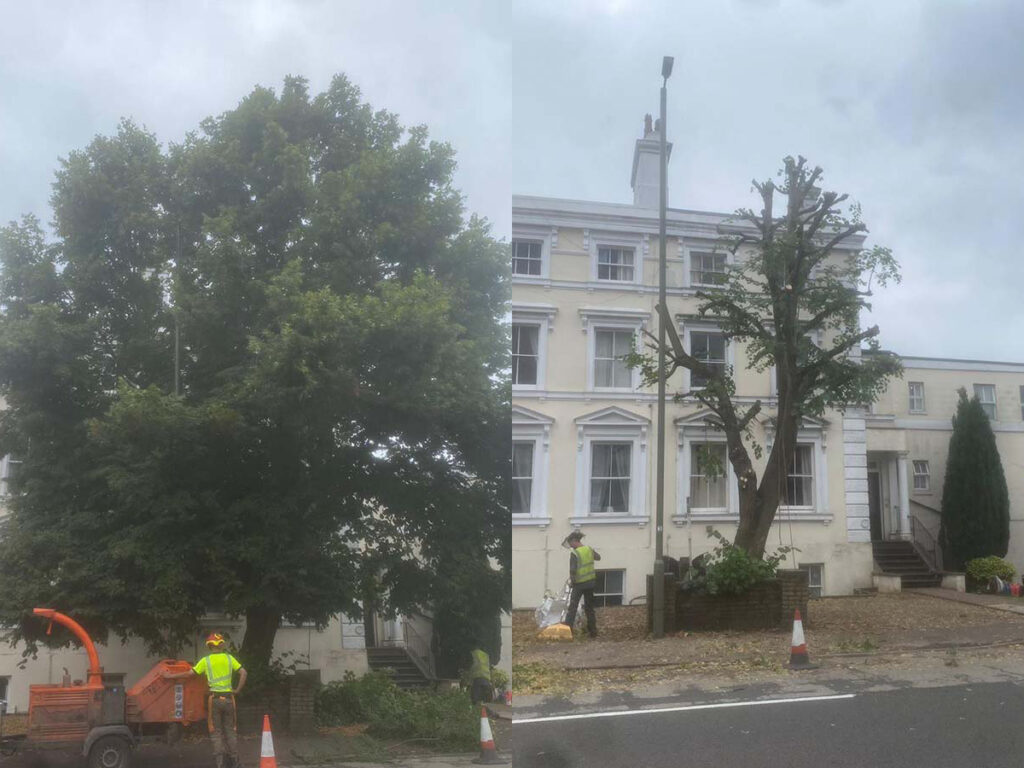
Crown reduction reduces the overall height and/or spread of a tree’s canopy while retaining an appropriate natural structure.
It may be considered where a tree has become too large for its setting or where managing the canopy is preferable to removing the tree.
Crown reduction isn’t simply cutting the top off a tree. Poorly executed work can harm tree health and appearance, which is why professional assessment is important.
What Is Crown Lifting?
Crown lifting involves removing selected lower branches to increase clearance between the ground and the tree’s canopy.
It may be useful where branches interfere with:
- Driveways
- Paths
- Roads
- Buildings
- Access beneath the tree
For some properties, crown lifting can solve an access or clearance problem without substantially reducing the tree’s overall canopy.
When Might Tree Removal Be Necessary?
There are circumstances where retaining a tree may no longer be appropriate.
Possible reasons include:
- Severe structural instability
- Significant irreversible decline
- Major storm damage
- An unacceptable risk that cannot reasonably be managed
- A tree that conflicts with approved development
- Other site-specific circumstances where removal is considered the appropriate solution
A professional assessment should consider whether the problem can reasonably be addressed without removing the entire tree.
Does a Diseased Tree Always Need Removing?
No.
The presence of disease, fungi or dead branches doesn’t automatically mean a tree needs to be felled.
The significance depends on factors including:
- Tree species
- Type and extent of disease or decay
- Location of the defect
- Overall tree condition
- Surrounding targets
Some trees can continue to be safely retained with monitoring or appropriate management.
What If the Tree Is Too Big for My Garden?
A large tree isn’t automatically dangerous simply because of its size.
If canopy size is creating a genuine problem, appropriate crown work may sometimes help.
However, repeatedly reducing a tree that is fundamentally unsuitable for its location may not always be the best long-term solution. This is where professional advice becomes particularly valuable.
What If Branches Are Overhanging My House?
Overhanging branches don’t necessarily mean the whole tree should be removed.
Depending on the circumstances, options could include:
- Selective pruning
- Crown reduction
- Crown lifting
- Deadwood removal
The correct approach depends on the tree, branch structure and reason for the work.
What Happens If Removal Is Recommended?
Where tree removal is considered appropriate, the method will depend on the site.
In open areas, conventional felling may be possible. In residential gardens, trees are often dismantled in controlled sections because buildings, fences and neighbouring properties limit the available space.
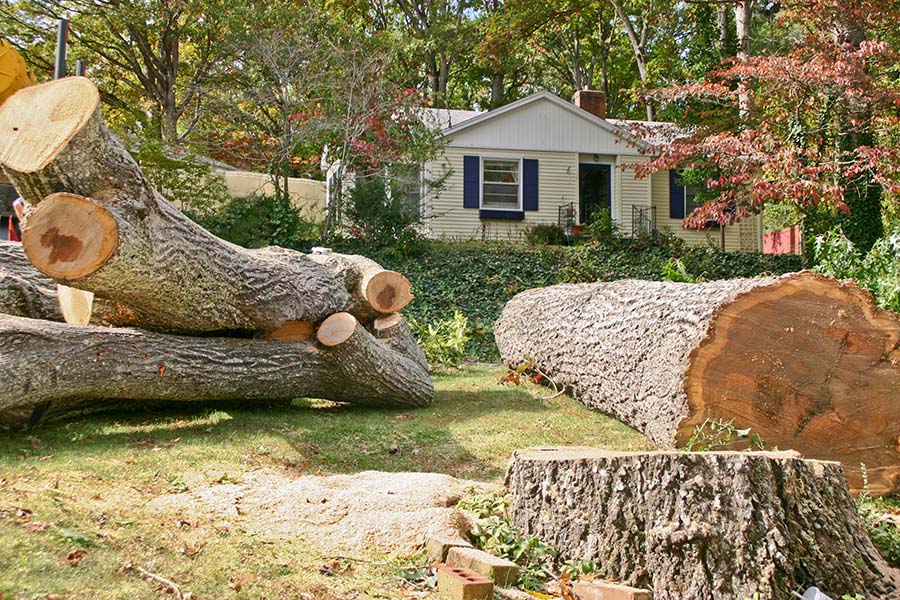
Once the tree has been removed, the stump can either remain or be dealt with separately through stump grinding.
Should I Remove the Stump Too?
That depends on how you intend to use the area.
Stump grinding may be worthwhile if the stump:
- Is a trip hazard
- Prevents landscaping
- Occupies useful garden space
- Is producing unwanted regrowth
If the stump causes no practical problem, removal isn’t always essential.
What If the Tree Is Protected?
Before significant pruning or tree removal, check whether the tree is subject to a Tree Preservation Order or conservation-area controls.
Protected status doesn’t necessarily prevent tree work, but the appropriate permission or notification may be needed.
This should be established before work begins.
How Does a Tree Surgeon Decide Between Pruning and Removal?
A professional tree surgeon should consider:
- Why the work is being requested
- The health and structure of the tree
- The tree’s species and likely response to pruning
- Its relationship with buildings and surrounding land
- Whether the identified problem can be addressed while retaining the tree
- Any legal restrictions affecting the work
The best solution should address the problem without carrying out more work than is reasonably necessary.
Tree Surgery in Dorking, Reigate and Surrey
South East Forestry and Tree Services provides tree surgery across Dorking, Reigate and Surrey, including crown work, pruning, tree felling and removal.
If you’re uncertain whether a tree needs pruning or removing, professional assessment can help identify the most suitable approach before you commit to major work.
Final Thoughts
Tree removal should not automatically be the first response to an overgrown, damaged or unhealthy-looking tree.
Many problems can potentially be managed through appropriate pruning, crown work or monitoring.
Where a tree is seriously compromised, however, removal may be the safest and most practical solution.
An experienced tree surgeon can assess the tree and explain the available options so that you can make an informed decision.
FAQs
Is it better to prune or remove a tree?
It depends on the condition of the tree and the reason for the work. If the problem can be appropriately managed through pruning, retaining the tree may be preferable. Severely compromised trees may require removal.
Can crown reduction stop me needing to remove a tree?
Sometimes. Crown reduction can manage the size or spread of suitable trees, but it isn’t an appropriate alternative to removal in every situation.
Does a dead branch mean my tree is dying?
Not necessarily. Trees can develop individual dead branches while remaining otherwise healthy. A tree surgeon can assess whether the deadwood indicates a wider problem.
Should a tree touching my house be removed?
Not automatically. Appropriate pruning may sometimes create the necessary clearance. The tree and its relationship with the building should be assessed before deciding.
What happens to the stump after tree removal?
The stump can be left in place or ground down. Stump grinding is useful where the area needs to be landscaped, replanted or otherwise reused.