
A damaged or unhealthy-looking tree doesn’t necessarily need to be cut down.
One of the most useful questions to ask before arranging tree removal is:
Can the tree be safely retained instead?
The answer depends on the type of damage, the tree’s overall condition, its species and where it is growing.
Professional tree surgeons in Dorking, Reigate and Surrey can assess these factors and determine whether pruning, crown work, monitoring or another approach may allow the tree to remain.
Can a Diseased Tree Be Saved?
Sometimes.
“Tree disease” covers many different problems, and their impact varies considerably. Some conditions can be managed, while others may cause progressive decline.
The important questions are:
- What is causing the symptoms?
- How extensively is the tree affected?
- Has its structure been compromised?
- Is the tree continuing to grow normally?
- What is located around it?
Correct assessment should come before deciding on removal.
What Are the Signs of an Unhealthy Tree?
Possible signs include:
- Dead branches
- Unusual leaf loss
- Crown dieback
- Discoloured foliage
- Damaged or missing bark
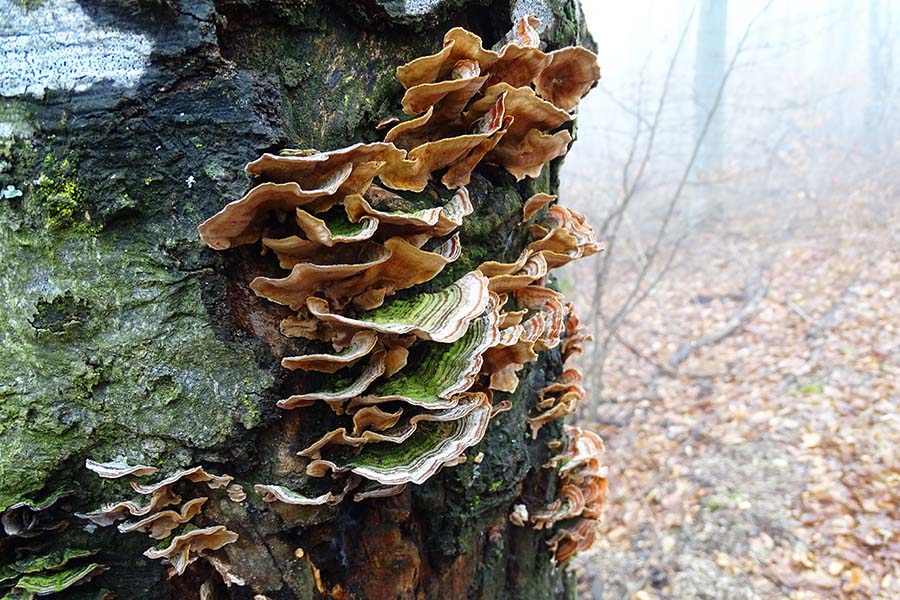
- Fungal growth
- Cavities
- Cracks
- Reduced growth
However, individual symptoms don’t always reveal the cause.
For example, fungal growth can be important, but its significance depends on the fungus, its location and the condition of the tree.
Can a Storm-Damaged Tree Be Saved?
Again, sometimes.
A tree that loses a branch during a storm does not automatically need to be felled.
A tree surgeon may consider:
- Size and location of the failed branch
- Extent of damage
- Remaining crown structure
- Damage to the trunk
- Root stability
- Whether additional branches have been weakened
Minor damage may require little more than appropriate pruning. Severe structural damage can make removal necessary.
What Tree Surgery Can Help Retain a Tree?
Depending on the circumstances, options may include:
Deadwood Removal
Removing dead branches can address particular hazards without substantially changing the rest of the tree.
Selective Pruning
Damaged, crossing or problematic branches can sometimes be selectively removed.
Crown Reduction
Appropriate crown reduction can reduce the size or spread of suitable trees while retaining a balanced canopy.
Crown Lifting
Removing selected lower branches can provide additional clearance where a tree is conflicting with access or nearby structures.
Cabling and Bracing
In certain circumstances, supplementary support systems may be considered for particular structural issues.
The correct option depends on the individual tree.
When Does a Tree Need to Be Removed?
Removal may be recommended where a tree is so badly compromised that retention is no longer considered an appropriate option.
Examples might include:
- Severe structural failure
- Extensive irreversible decline
- Major root instability
- Serious storm damage
- A level of risk that cannot reasonably be managed through other work
Tree removal should be based on professional assessment rather than appearance alone.
Does Fungal Growth Mean a Tree Must Be Felled?
No.
Fungal fruiting bodies can indicate decay, but different fungi affect trees in different ways.
The presence of a fungus should therefore prompt assessment rather than an automatic decision to remove the tree.
Its species, location and relationship with the tree all matter.
What About a Hollow Tree?
A hollow tree isn’t automatically unsafe either.
Trees can sometimes continue growing with internal cavities. The important issue is whether sufficient sound structure remains and whether other defects are present.
This is another situation where visual appearance alone can be misleading.
Can a Leaning Tree Be Saved?
Some healthy trees naturally grow at an angle.
What is more concerning is a new or increasing lean, particularly following severe weather or movement around the roots.
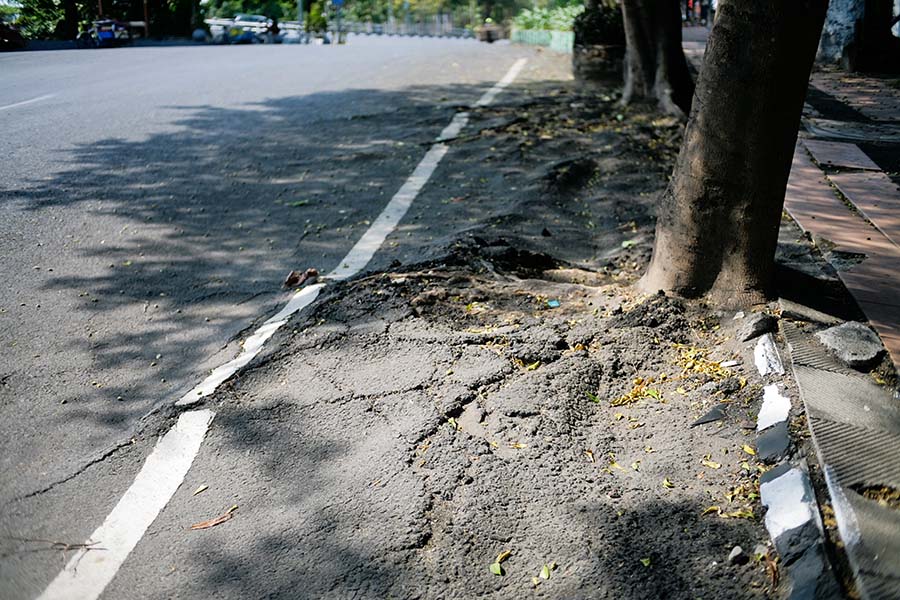
Signs such as lifted soil or newly exposed roots should be professionally assessed promptly.
Is Pruning Always Better Than Removal?
No.
Retaining trees where appropriate is desirable, but pruning shouldn’t be used simply to postpone removal where a tree is seriously compromised.
Equally, a tree shouldn’t be removed simply because a smaller intervention would be easier to overlook.
The appropriate approach is the one that addresses the actual condition and circumstances of the tree.
What Happens During a Professional Assessment?
A tree surgeon may examine:
- Crown condition
- Deadwood
- Branch structure
- Trunk defects
- Fungal growth
- Visible roots
- Surrounding soil
- Recent damage
- Proximity to buildings and people
They can then explain the available management options.
Can Protected Trees Receive Necessary Work?
Yes, but legal controls may apply.
Trees covered by Tree Preservation Orders or situated within conservation areas can still require maintenance or safety work.
However, you may need council permission or to follow the relevant notification process before work takes place.
Don’t assume that a damaged tree is automatically exempt from normal controls; obtain appropriate advice first.
Tree Surgeons in Dorking, Reigate and Surrey
South East Forestry and Tree Services provides professional tree surgery to homeowners and businesses throughout Dorking, Reigate and Surrey.
If you’re worried about a damaged, diseased or declining tree, professional assessment can help determine whether it can reasonably be retained and what work, if any, is required.
Quick Answer: Can My Tree Be Saved?
Possibly.
Dead branches, storm damage, fungi, cavities or disease do not automatically mean a tree needs to be cut down.
A professional assessment should consider the whole tree, the extent of the problem and its location before deciding whether pruning, monitoring or removal is appropriate.
Final Thoughts
A tree that looks unhealthy isn’t necessarily beyond saving.
Appropriate tree surgery can sometimes address damaged branches, excessive growth or particular structural issues while allowing the tree to remain.
Other trees may be too badly compromised to retain safely.
The key is obtaining an accurate assessment before making an irreversible decision.
FAQs
Can a diseased tree recover?
Some trees can recover or continue to be managed depending on the disease, its severity and the tree’s overall condition. Accurate diagnosis is important before deciding what action to take.
Does fungus mean my tree needs to be cut down?
Not necessarily. Fungal growth can indicate decay, but its significance depends on the fungus, where it is growing and the condition of the tree.
Can a storm-damaged tree be saved?
Minor or moderate damage can sometimes be managed through pruning or other tree surgery. Severe structural or root damage may make removal necessary.
Can a hollow tree still be safe?
Potentially. A cavity alone doesn’t determine whether a tree is unsafe. Its overall structure, condition and surroundings need to be assessed.
Can crown reduction save an overgrown tree?
Crown reduction can sometimes manage a tree that has become too large for its location, provided the work is appropriate for the species and condition of the tree.
Should I remove a tree if it starts leaning?
Not necessarily. Some trees naturally lean. A new or increasing lean, particularly after storms or accompanied by root movement, should be professionally assessed.