


Ash dieback has changed the look of the Surrey and Sussex countryside. Along lanes, woodland edges and hedgerows you’ll see ash trees with thin, patchy crowns and bare, grey branches. If you own land, a garden or a property with ash trees nearby, it’s important to know what to look for and when to act. This guide explains how to spot ash dieback, why infected trees become dangerous and what you can do about it this winter.
What is ash dieback?
Ash dieback is a disease of ash trees caused by a fungus called Hymenoscyphus fraxineus. It was first confirmed in the UK in 2012 and has since spread right across the country, including Surrey and Sussex.
The fungus spreads on the wind from fallen, infected leaves in late summer. It blocks the tree’s water transport system, which causes leaves, shoots and branches to die back. Most infected ash trees decline over several years, and the majority are expected to die. A small proportion show some tolerance, which is why healthy-looking ash trees shouldn’t be removed just in case.
Signs of ash dieback
The signs are easiest to see in summer, but many are visible all year round:
- Thinning crown: fewer leaves, with bare, dead twigs and branches at the tips, giving the crown a patchy, see-through look
- Dark leaf blotches and wilting: in summer, leaves develop brown or black patches and wilt early
- Diamond-shaped bark lesions: dark patches on the bark, often centred on a side shoot or branch junction
- Bushy new growth on the trunk: clusters of small shoots (epicormic growth) as the tree tries to recover
- Fungus or decay at the base: a sign that secondary infections such as honey fungus may be weakening the roots
If you’re unsure whether a tree has ash dieback, or how far gone it is, a professional inspection will tell you. Our article on what a tree surgeon looks for during a tree inspection explains what’s involved.
Why trees with ash dieback become dangerous
Dead and dying ash becomes brittle surprisingly quickly. Branches can snap off without warning, and badly affected trees can fail at the base if the roots have been weakened by decay. That’s a real risk where ash trees stand next to roads, footpaths, buildings, play areas or power lines.
Brittle ash is also dangerous to climb, so badly affected trees often need to be dismantled from a cherry picker or with other machinery rather than climbed, keeping the team safe and the work controlled.
As a landowner you have a duty of care to make sure your trees don’t put people or property at risk. If a tree next to a road is a danger, the highway authority can require you to make it safe.
Why winter is a good time to deal with ash dieback
Ash trees with dieback can be assessed at any time, but winter is a practical time to carry out the work:
- Bird nesting season is over, so there’s much less risk of disturbing nesting birds (the main season runs from March to August)
- Storm season puts extra strain on weakened trees, so dealing with high-risk trees now reduces the chance of them coming down on a building, road or power line
- Bare branches make it easier to see the structure of the tree and the extent of dead wood
- Gardens and fields are usually quieter, which can make access easier
Your options: reduce, remove or monitor
Not every infected ash needs to come down straight away. Depending on how badly affected the tree is and what’s around it, we may recommend:
- Monitoring: for lightly affected trees away from people and property, with a check-up each year
- Removing dead wood: taking out dead and hanging branches to reduce the risk while the tree is still relatively healthy. See our dead wood and branch removal service
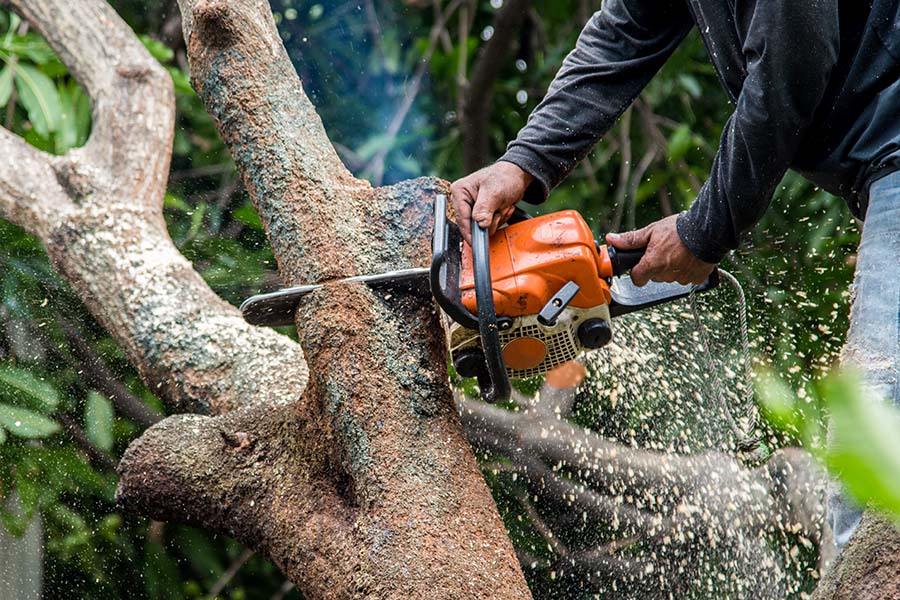
- Felling or dismantling: for badly affected trees close to roads, buildings or other targets. See our tree removal service
Do you need permission to fell a tree with ash dieback?
Possibly. If the tree is protected by a Tree Preservation Order or is in a conservation area, the normal rules still apply, although there are exceptions for trees that are dead or dangerous. Felling larger volumes of timber outside a garden may also need a felling licence from the Forestry Commission. Our guide on whether you need permission to cut down a tree explains the rules, and we can help you check before any work starts.
What happens to the wood?
Ash is one of the best firewoods there is: it splits easily and burns well once seasoned. Timber from felled ash can be cut into logs and left for you to season, chipped on site, or taken away. If you’d rather not wait for your own logs to dry out, we also have seasoned logs for sale.
When an ash tree has to come out, it’s worth thinking about what to plant in its place. Native species such as oak, field maple, hornbeam, lime and wild cherry can all help fill the gap.

FAQs
Can a tree recover from ash dieback?
Some ash trees show tolerance and survive with little damage, but most infected trees continue to decline. There’s no cure, so the focus is on managing the risk and keeping tolerant trees where it’s safe to do so.
Is ash dieback dangerous to people or pets?
The disease itself isn’t harmful to people or animals. The danger comes from dead and brittle branches or whole trees falling.
Should I cut down healthy ash trees to stop the spread?
No. Removing healthy trees won’t stop the disease, and some may turn out to be tolerant. Only trees that are dead, dying or dangerous should be removed.
Can I burn wood from trees with ash dieback?
Yes. Ash with dieback makes good firewood once it’s been properly seasoned, and burning it won’t spread the disease.
How much does it cost to remove a tree with ash dieback?
It depends on the size of the tree, how badly it’s affected, access and what’s around it. Dead ash often needs a cherry picker or machinery rather than climbing, which can affect the price. Our guide to tree removal costs gives more detail, or we can give you a free quote.
Qualified, insured and experienced
- Highly trained and qualified team
- £10 million public liability insurance
- Approved contractors for many local authorities across Surrey and Sussex
Worried about ash trees on your property?
If you have ash trees showing signs of dieback, contact South East Tree Surgeons for a free, no-obligation assessment and quote. We cover Dorking, Reigate and across Surrey and Sussex.