
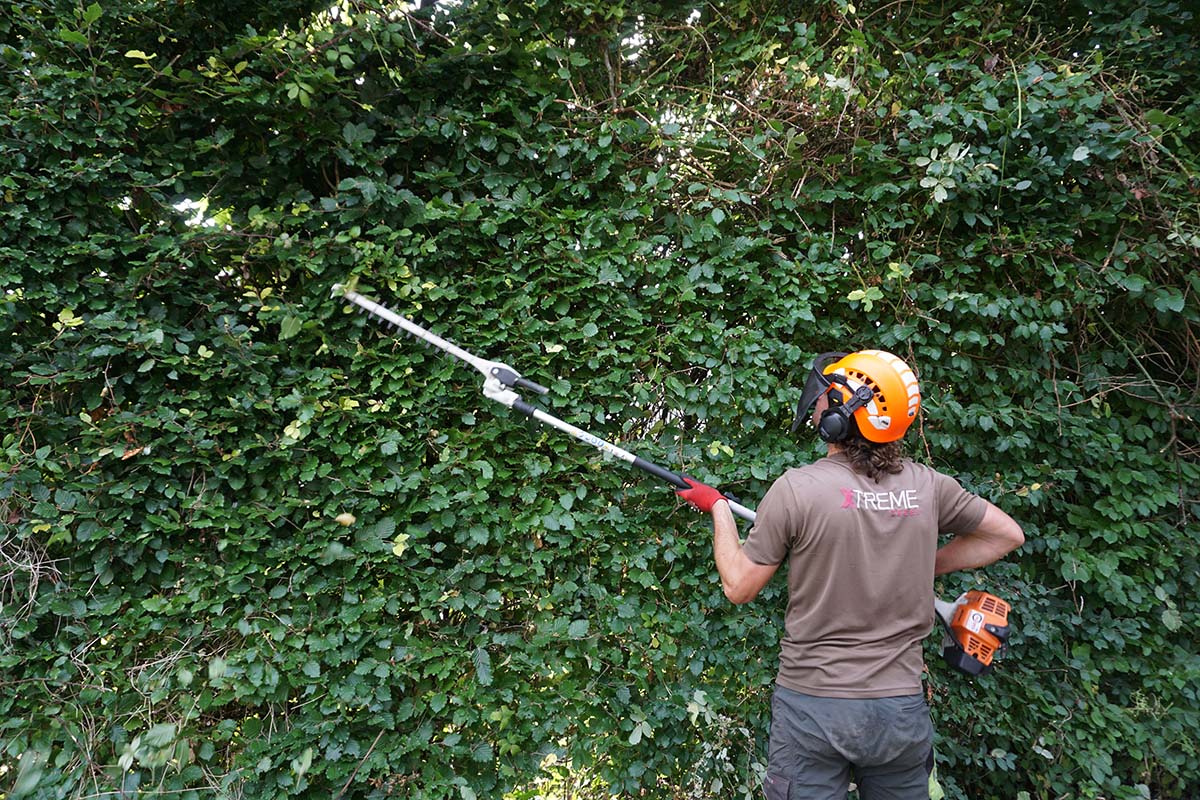
Hedges are a big part of the character of Surrey’s towns and villages, from neat laurel and beech boundaries in Dorking and Reigate to the field hedges of the Surrey Hills. With autumn here, it’s the start of the main hedge cutting season, so this guide sets out when you’re allowed to cut, the best time for different types of hedge and what to do if yours needs more than a trim.
Quick answer: when can you cut hedges in the UK?
- Garden hedges can legally be cut at any time of year, but you must not damage or destroy an active bird’s nest. Most people avoid heavy cutting from March to August, the main nesting season.
- Hedgerows on farmland in England must not be cut or trimmed from 1 March to 31 August, apart from a few exceptions. That makes September to February the cutting season for field hedges.
- The best time for most hedges is late autumn to late winter, when birds aren’t nesting and many hedges are dormant.
Nesting birds: the rule that applies to every hedge
Under the Wildlife and Countryside Act 1981, it’s an offence to intentionally damage or destroy the nest of any wild bird while it’s in use or being built. This applies all year round and to every hedge, including garden hedges.
Most birds nest between March and August, so this is when you’re most likely to find an active nest. If you need to cut during this period, check the hedge carefully first. If you find an active nest, leave that section until the young have fledged.
Farm and field hedgerows: the 1 March to 31 August rule
If you farm, keep livestock, run a smallholding or have a hedgerow on or next to agricultural land in England, the hedgerow regulations say you must not cut or trim it from 1 March to 31 August. The rules cover most field hedges, including those longer than 20 metres and shorter ones joined to another hedge at each end.
There are some exceptions, including:
- cutting for safety, for example where a hedge is blocking a road or footpath or is dead, diseased or likely to fall
- hedge laying and coppicing, which are allowed until 30 April
- cutting in August before sowing oilseed rape or temporary grassland, on the field side only and after notifying the Rural Payments Agency
The full details are on the GOV.UK hedgerow management guidance. Private garden boundaries are not covered by these farm rules, but the nesting bird law still applies.
When is the best time to cut a hedge?
The legal rules tell you when you mustn’t cut. The best time also depends on the type of hedge and what you want from it:
- Native and mixed hedges (hawthorn, blackthorn, hazel, field maple): late autumn to late winter. Cutting after the berries have been eaten, from around January, leaves food for birds through the autumn.
- Beech and hornbeam: a trim in late summer once nesting has finished keeps a neat shape and helps the hedge hold its leaves over winter.
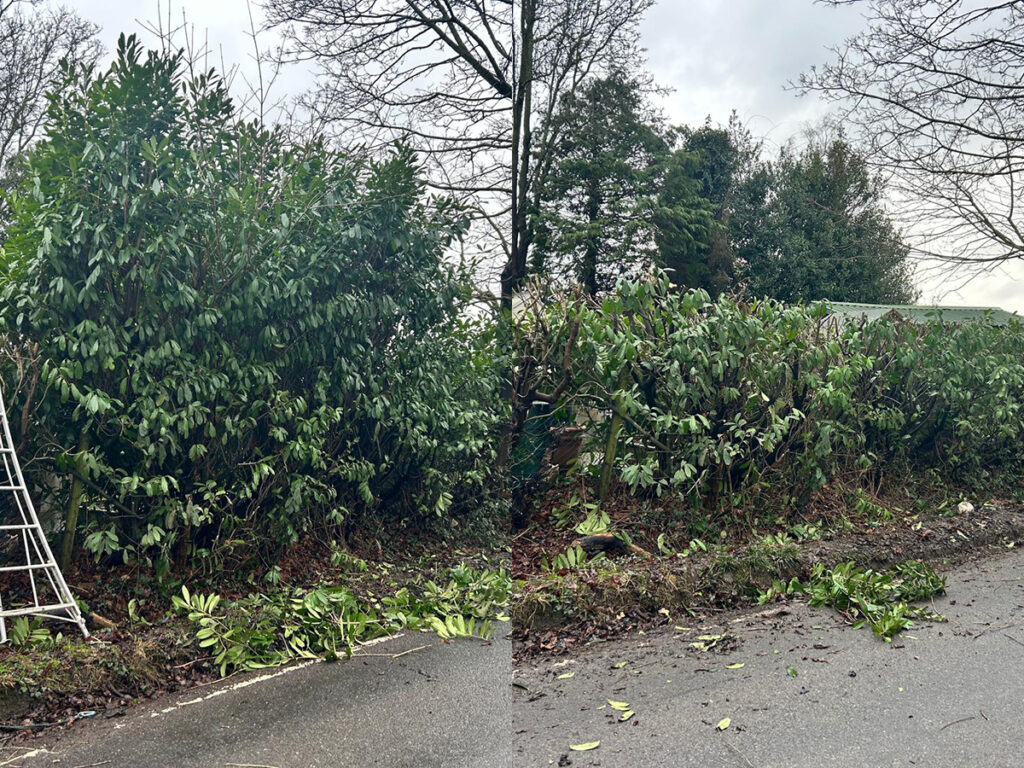
- Evergreens such as laurel, privet and conifers: trim in late summer or early autumn, checking for nests first. Leylandii and most conifers won’t regrow from old brown wood, so never cut back beyond the green growth.
- Overgrown hedges needing hard cutting back: late winter, before the nesting season starts, gives the hedge the whole growing season to recover.
Do you need permission to cut a hedge?
For a normal trim you won’t need permission. But you may need it if:
- the hedge or trees within it are protected by a Tree Preservation Order or are in a conservation area
- you want to remove a countryside hedgerow altogether, which can need permission from the council under the Hedgerows Regulations 1997
Many parts of Dorking and Reigate are conservation areas. Our guide to whether you need permission to cut down a tree in Surrey explains protected trees and conservation areas, and how to check with Mole Valley or Reigate & Banstead council.
Can I cut my neighbour’s hedge?
You can usually cut back branches that overhang your side, up to the boundary, as long as you don’t damage the health of the hedge, you check for nesting birds and the hedge isn’t protected. It’s always best to speak to your neighbour first. You shouldn’t go onto their land or cut beyond the boundary without their agreement.
Trimming, reducing or laying: what does your hedge need?
A regular trim keeps a healthy hedge in shape. If a hedge has grown too tall or wide, it may need reducing in height or width, which is bigger work and often needs a tower, cherry picker or specialist cutting equipment. Old, gappy field hedges can be brought back to life by hedge laying or coppicing in winter.
Many people ask whether a tree surgeon is the right person for the job. Our post do tree surgeons cut hedges? explains when it makes sense to use one.
Hedge cutting and management in Surrey
South East Tree Surgeons provide hedge cutting and management in Dorking, Reigate and across Surrey, from garden hedge trims and laurel or leylandii reductions to field hedges for farms and estates. We work around Dorking, Reigate, Redhill, Leatherhead, Horley and the surrounding villages, and we’re fully insured. If your hedge includes trees that need work, we can do that at the same time as part of our tree surgery services.

FAQs
What months can you not cut hedges?
Field hedgerows on farmland in England must not be cut from 1 March to 31 August. Garden hedges can be cut at any time, but you must not disturb active bird nests, which are most common from March to August.
Can I cut my garden hedge in summer?
Yes, a light trim is fine as long as you check carefully for nesting birds first and leave any section with an active nest alone. Save hard cutting back for late winter.
Is it illegal to cut hedges in April?
For hedgerows on agricultural land, cutting from 1 March to 31 August is not allowed except in specific cases, such as safety or hedge laying until 30 April. For garden hedges it isn’t illegal, but disturbing an active nest is an offence.
How often should a hedge be cut?
Most garden hedges need one or two trims a year. Field hedges are often cut every two or three years, which is better for wildlife and lets them flower and fruit.
When is the best time to cut back an overgrown hedge?
Late winter, before birds start nesting. This gives the hedge the full growing season to recover.
Book your hedge cutting
Autumn and winter slots fill up quickly. Contact South East Tree Surgeons for a free quote for hedge cutting, reduction or management anywhere in Surrey.