

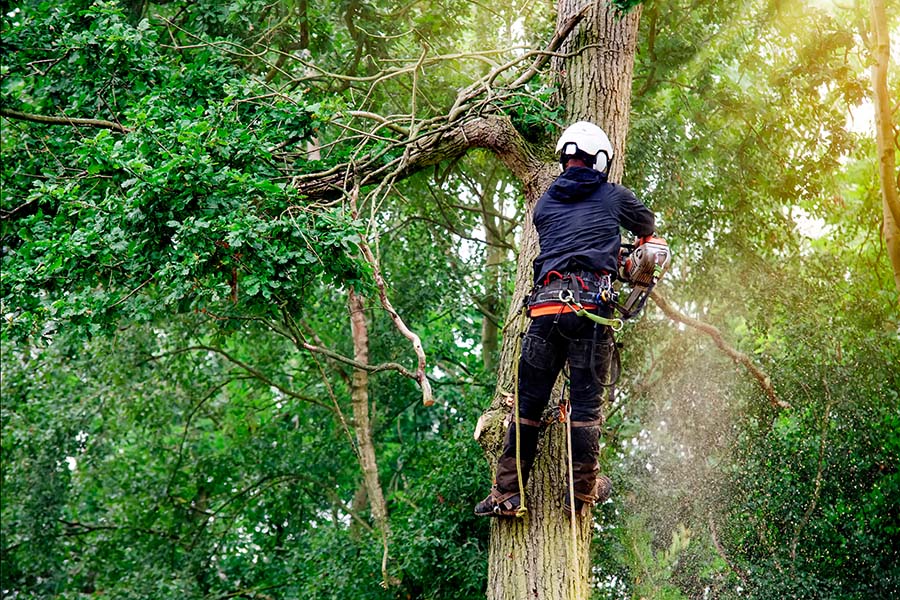
If you’re thinking about cutting down or pruning a tree in your garden, the first question is usually whether you need permission. For most garden trees in Surrey the answer is no, but if a tree is protected by a Tree Preservation Order (TPO) or stands in a conservation area, you’ll need to apply to or notify the council first. Getting it wrong can mean a large fine. This guide explains the rules, how to check whether a tree is protected and how to apply if it is.
Quick answer: do you need permission?
You will usually need permission, or need to tell the council first, if:
- The tree has a Tree Preservation Order (TPO): you need written consent before cutting it down or doing almost any work to it
- The tree is in a conservation area: you must give the council six weeks’ written notice before most work
- The tree is protected by a planning condition: for example, trees that had to be kept when a house or estate was built
- You’re felling a large amount of timber: more than 5 cubic metres in a calendar quarter outside a garden may need a felling licence from the Forestry Commission
If none of these apply, you can normally cut down or prune a tree on your own land without asking anyone. It’s still worth checking first, because you can’t use “I didn’t know” as a defence.
What is a Tree Preservation Order (TPO)?
A Tree Preservation Order is a legal protection placed on a tree, a group of trees or a woodland by the local planning authority. Councils use them to protect trees that make an important contribution to the local area, for example a mature oak visible from the road or a line of trees along a boundary.
TPOs aren’t based on species. Any tree can be protected, from a large beech or oak to a smaller ornamental tree in a prominent spot. They’re common in residential areas of Surrey where mature trees contribute to the local landscape.
If a tree has a TPO, you must not cut down, top, lop, uproot, wilfully damage or wilfully destroy it without the council’s written consent. That includes pruning and crown reductions, not just felling. Our guide to the best time of year for tree surgery explains when this kind of work is usually done.
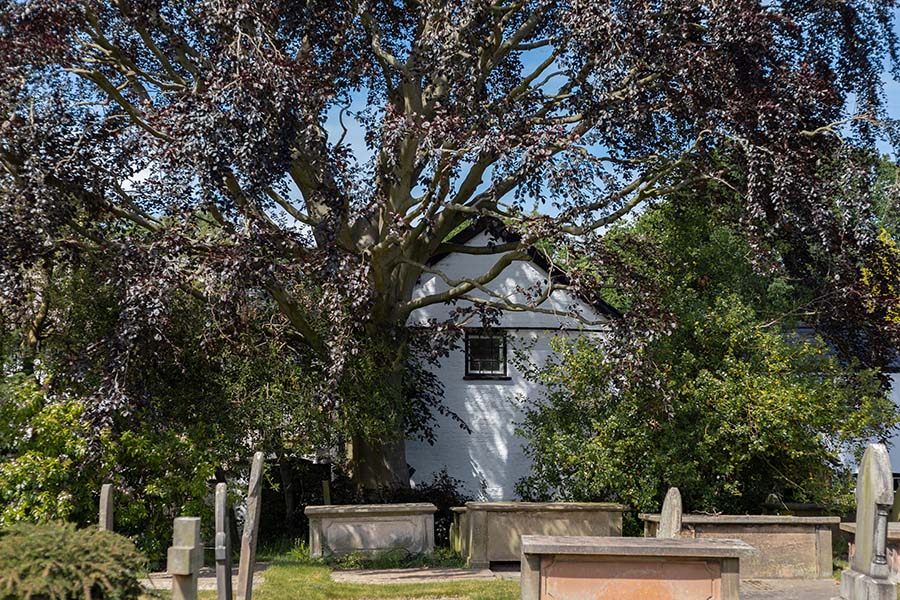
Trees in conservation areas
Many towns and villages have conservation areas, including parts of Reigate, Dorking and other Surrey towns. Here, trees are protected even if they don’t have their own TPO.
If your property is in a conservation area and the tree trunk is more than 7.5cm in diameter at 1.5m above the ground, you must give the council six weeks’ written notice before cutting down or pruning it. This gives the council time to decide whether the tree is important enough to protect with a TPO. If they don’t respond within six weeks, you can usually go ahead.
How to check if a tree is protected
- Check your council’s map or contact the planning team: Mole Valley District Council and Reigate & Banstead Borough Council both keep records of TPOs and conservation areas, as do other councils across Surrey and Sussex.
- Check your property deeds and planning history: trees on newer developments are sometimes protected by planning conditions.
- Ask us: we can check whether a tree is protected as part of a free visit and quote.
How to apply for permission
If a tree has a TPO, you apply for consent to the council, usually online through the Planning Portal. There’s no fee. You’ll need to say which tree, what work you want to do and why. Photos and a report from a qualified arborist make it much more likely the work will be approved, especially if you’re asking to fell a tree. The council normally makes a decision within eight weeks.
For conservation areas you submit a notice rather than an application, using the same system.
We can help with both: assessing the tree, recommending sensible work and providing the information the council needs. If the tree is affected by building work, you may also need a BS 5837 tree survey for planning.
Exceptions: dead and dangerous trees
You don’t need consent to remove a protected tree that is dead, or to do urgent work to make a dangerous tree safe. But the rules are strict:
- You should normally give the council five working days’ notice before removing a dead protected tree, unless it’s an emergency
- Only the work needed to remove the danger is allowed
- It’s up to you to prove the tree was dead or dangerous, so take photos and get a written assessment from an arborist before any work
- You may still have to plant a replacement tree
This applies to trees killed by disease such as ash dieback.
Other rules to be aware of
- Nesting birds: it’s an offence to damage or destroy an active bird’s nest, so check carefully before any work, particularly between March and August. Our article on when you can cut hedges explains more.
- Bats: bats and their roosts are protected by law. Old trees with holes, cracks or loose bark can be used as roosts.
- Neighbours’ trees: you can usually cut back branches that overhang your boundary, as long as the tree isn’t protected, but you need the owner’s permission to go onto their land or to do more than that.

What happens if you cut down a protected tree without permission?
Cutting down or wilfully destroying a protected tree without consent is a criminal offence. Councils can and do prosecute, and the courts can impose unlimited fines, taking into account any money made from the work, such as an increase in property value. You’ll usually also have to plant a replacement tree. Other unauthorised work, such as heavy pruning, can also lead to a fine.
The tree surgeon can be prosecuted too, which is why reputable firms always check before starting work.
How South East Tree Surgeons can help
We regularly help homeowners in Dorking, Reigate and across Surrey and Sussex with protected trees. We can:
- Check whether a tree is protected by a TPO, conservation area or planning condition
- Assess the tree and recommend sensible, proportionate work
- Help you prepare and submit an application or conservation area notice
- Carry out the approved work safely
If you’re also weighing up whether a tree needs to come down at all, our guides on how to tell if a tree needs to be cut down and tree removal costs may help. You can find more about our tree removal and arboricultural consultancy services on our website.
FAQs
Can I cut down a tree in my own garden without permission?
Yes, as long as it isn’t protected by a TPO, isn’t in a conservation area and isn’t covered by a planning condition. Always check first.
How do I know if my tree has a TPO?
Check your council’s online map, contact the planning department, or ask us to check for you. Mole Valley District Council and Reigate & Banstead Borough Council both hold TPO records for their areas.
How long does it take to get permission for work on a TPO tree?
Councils usually decide within eight weeks. For trees in a conservation area, you can normally go ahead six weeks after giving notice if the council hasn’t responded.
Does it cost anything to apply for TPO consent?
No. There’s no fee to apply for consent for work on a protected tree or to give notice for a tree in a conservation area.
Do I need permission to prune a protected tree?
Yes. A TPO covers pruning, crown reductions and lopping, not just felling. You’ll need consent for most work, apart from removing dead branches.
Are certain tree species always protected?
No. Protection depends on whether a tree has a TPO, is in a conservation area or is covered by a planning condition, not on its species.
Can I cut back branches from my neighbour’s tree?
You can usually cut back branches that overhang your property to the boundary line, as long as the tree isn’t protected. If it has a TPO or is in a conservation area, you’ll need permission first.
Qualified, insured and experienced
- Highly trained and qualified team
- £10 million public liability insurance
- Approved contractors for many local authorities across Surrey and Sussex
Not sure if your tree is protected?
Contact South East Tree Surgeons for free, no-obligation advice. We’ll check whether your tree is protected, explain what work is allowed and give you a quote for doing it properly.